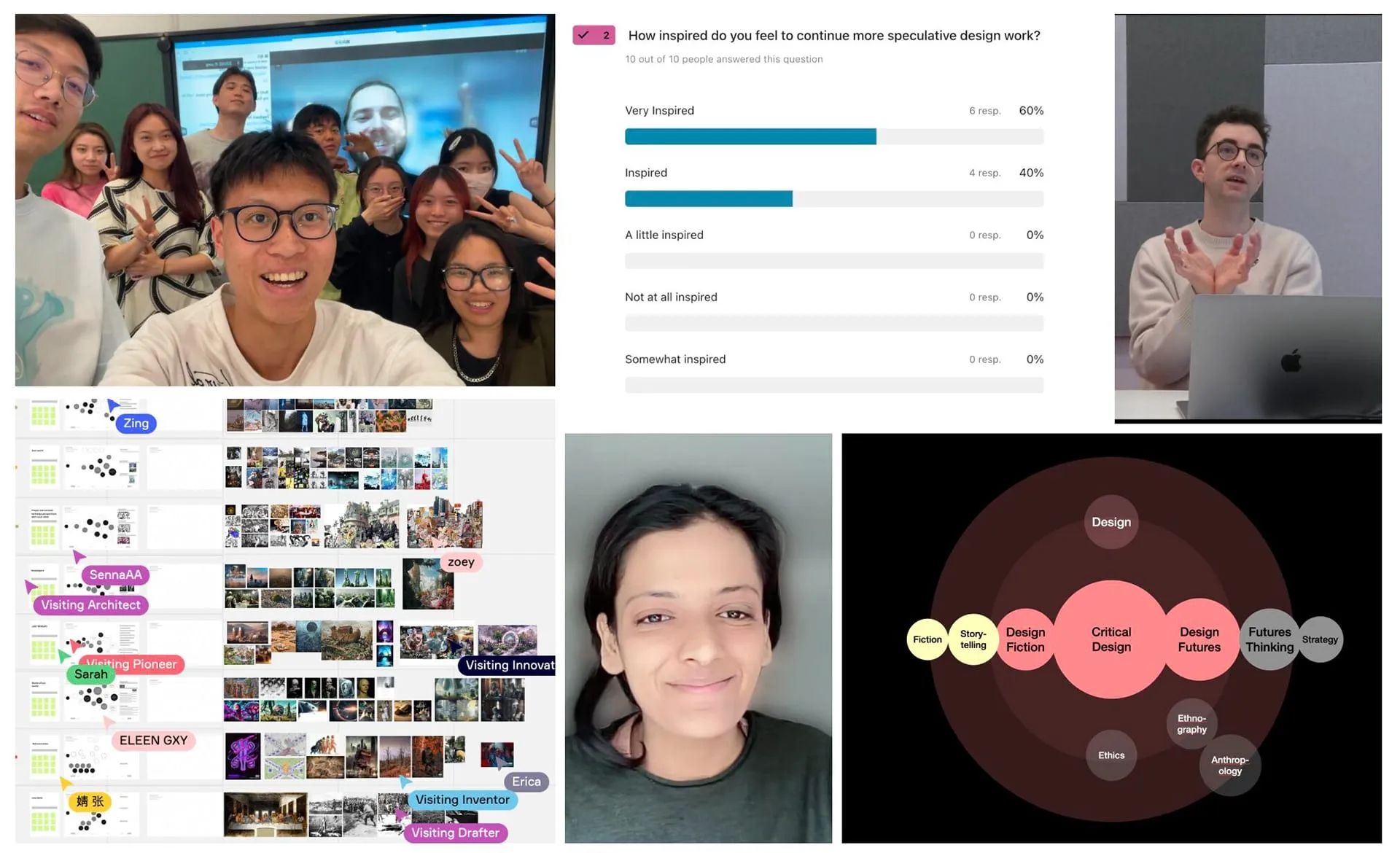
Speculative Design
Guest Lecturer
Client: J. Pacal in collaboration with Gengdan Institute of Beijing University of Technology
Project Duration: 3-5 weeks
Project Scope: Guest Lectures and Workshop Series - Speculative Design and Responsibility
Deliverables: Lecture Materials, Workshop Facilitation
Context
I received an invitation from Joe Pacal to serve as a guest lecturer in his Speculative Design and Responsibility course, which caters to a group of 30 graphic design students.
Objective
The primary objective was to leverage my expertise in qualitative research, specifically probe-led ethnographic studies, to impart knowledge and insights to students within the realm of speculative design. This educational endeavour encompassed both traditional lectures and hands-on workshop sessions.
Role and Responsibilities
-
Educational Guidance: My foremost responsibility was to provide students with a comprehensive understanding of cultural probes in the domain of design research. This included elucidating their significance in the design process, particularly within the context of speculative design and design fictions. Given that the students were non-native English speakers, I conscientiously simplified complex concepts to ensure clarity and accessibility.
-
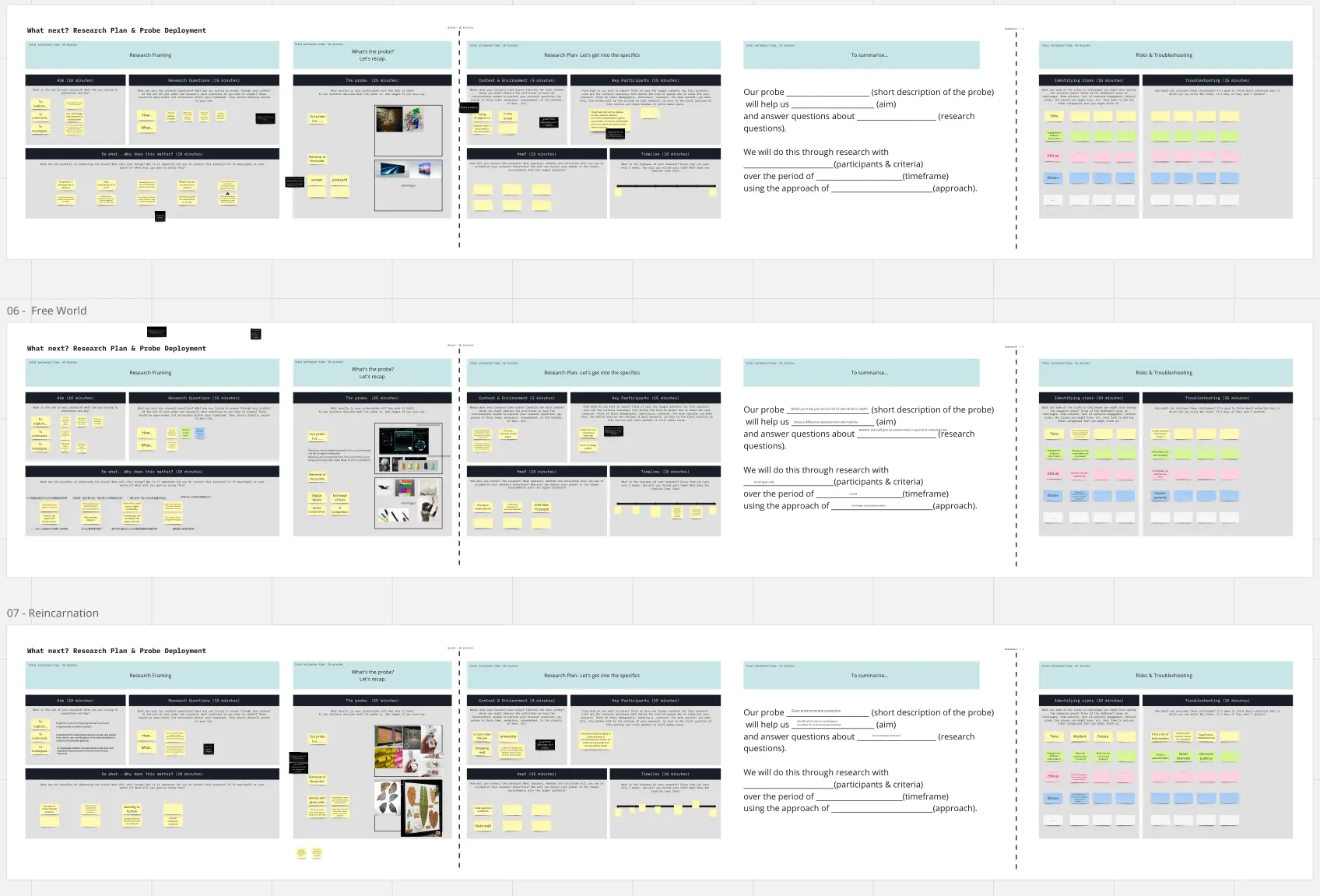
Workshop Facilitation: I also took on the task of crafting and facilitating remote workshops designed to equip students with the skills needed to conduct effective probe-led research. These sessions were pivotal in enabling students to proficiently engage in the research process.
Learnings/Challenges
-
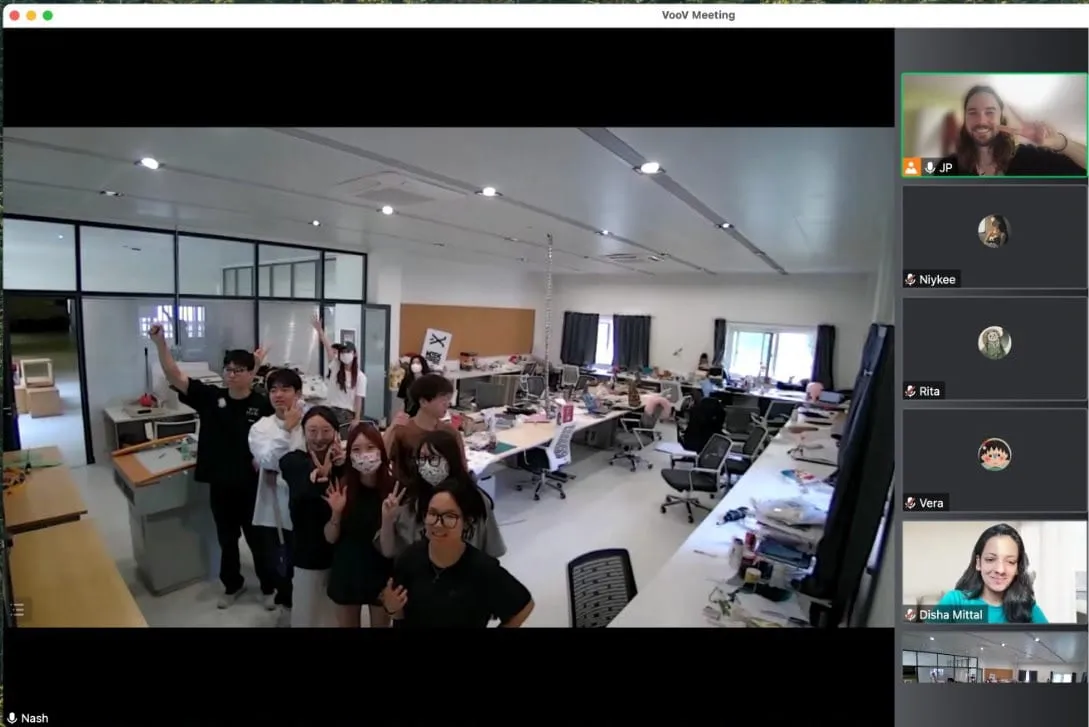
Teaching Diverse Linguistic Backgrounds: Effectively teaching non-native English-speaking students initially presented challenges. To navigate this, I adopted an approach that involved simplifying content and contextualising the material. Importantly, conducting remote workshops emerged as a particularly effective strategy, allowing for non-verbal communication and accommodating students’ individual learning preferences, including the use of translators.
-
Balancing Learning Styles: Striking a balance between experiential learning and theoretical knowledge was essential. This challenge was amplified by tight timeframes and high expectations regarding students’ learning outcomes. I endeavoured to create a balance between hands-on experiential learning and the dissemination of fundamental concepts.
-
Facilitation vs. Influence: Guiding students in a manner that allowed them to take the lead in their work was pivotal. I recognized the importance of providing students with the necessary time and space to learn from their own experiences. At times, it was important to refrain from excessive involvement and influence in their work, emphasising a facilitative role.